Chapter one
The web,
a technology
like any other?
Like any other technology, the web needs to be considered in terms of its relationship with society and with people. By looking at the history of technology, we can see the emergence of themes that can provide lessons for today’s designers.
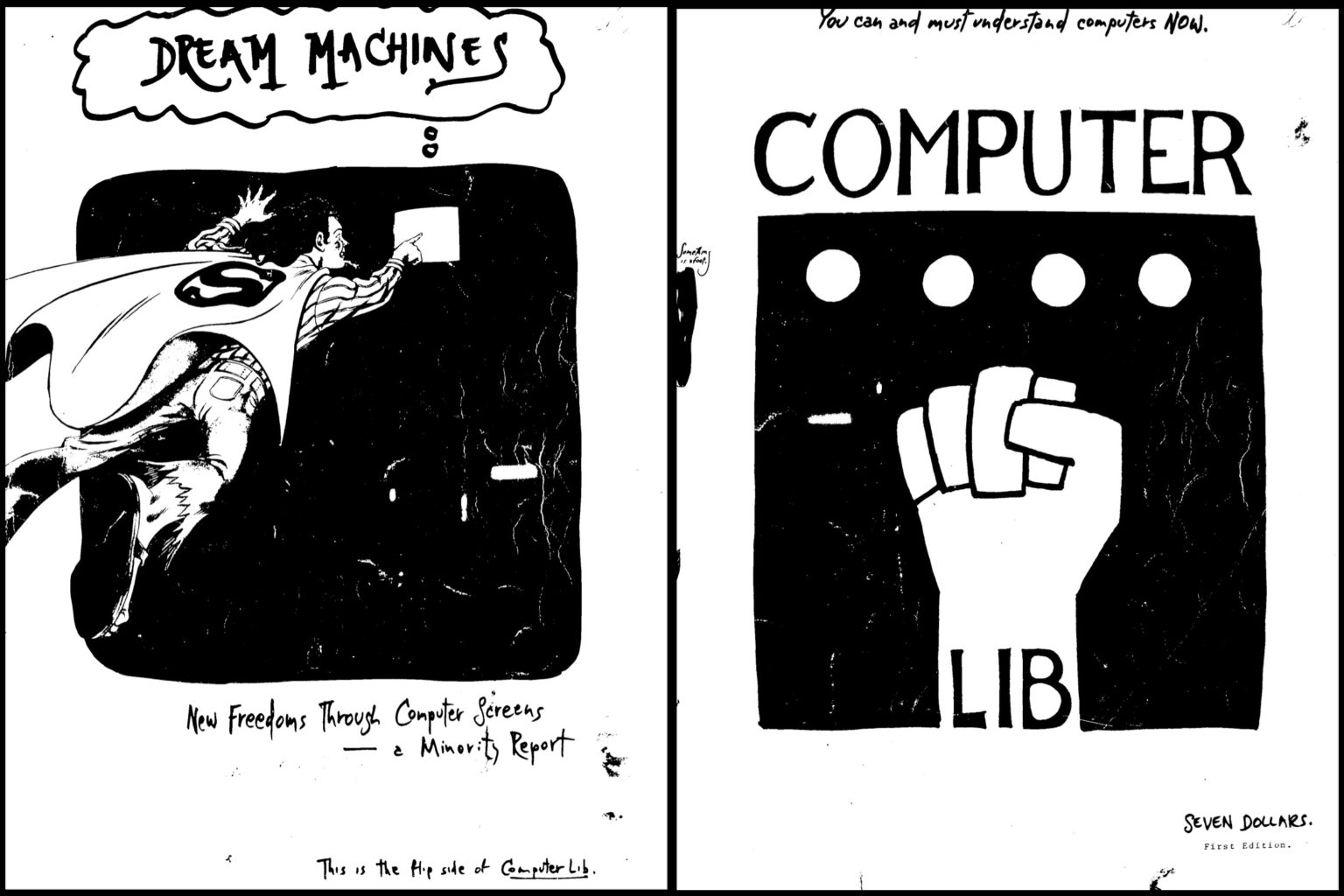
With the development of the Internet from the 1960s onwards, this utopia gradually became a reality, but very soon certain thinkers began to pave the way for a reflection on the issue of alienation from the first computers and on the issue of decentralisation, in opposition to the birth of the first computer giants such as IBM. Ted Nelson, with his book Computer Lib/Dream Machines, was to become the figurehead of a form of computer counter-culture that is still very much alive today.
Chapter two
The disappearance
of the libertarian ideal
Unfortunately, although these ideas emerged from the earliest research into the concept of the internet and the web, they ultimately failed to prevent the development of an extremely centralised web in the hands of a few capitalist giants.
The era of Big Data
The libertarian ideal of the early days gave way to the most voracious technocapitalism, which relegated the issue of information sharing to the background. This is the era of Big Data and its worst political abuses, such as the Cambridge Analytica scandal in 2016, and its sociological abuses, which had a decisive impact on the mental health of many individuals.
Chapter three
Rethinking the web
on a small scale
Faced with the hegemonic power of GAFAM, both economically and politically, a form of web activism has gradually developed on a small scale among designers, developers and, more broadly, some web users.
I evoke the term handmade web to suggest slowness and smallness as a forms of resistance.
A Handmade Web J.R. Carpenter 2015
Open source as an alternative
An important design scene has been created around the issue of open source, particularly in Belgium, around the work of collectives such as Luuse and Open Source Publishing, who are conducting both a political reflection on the role of the designer and the organisation of work, and a technological reflection through the design of open source tools. Their approach is reminiscent of the notion of the handmade web theorised by J.R. Carpenter, which places at the heart of design a relationship of dialogue and understanding between the individual and the technology.
The Same as before
“What is a website, anyway?” It’s easy to forget. Today there are millions of ways to make a website, and the abundance is daunting. But at its core, a website is still the same as ever before”
My website is a shifting house next to a river of knowledge. What could yours be? Laurel Schwulst 2018

HTML Enerrgy is a community of web-lovers and amateurs who are passionate about HTML and its potential and try to promote it all over the world with podcasts and events IRL.
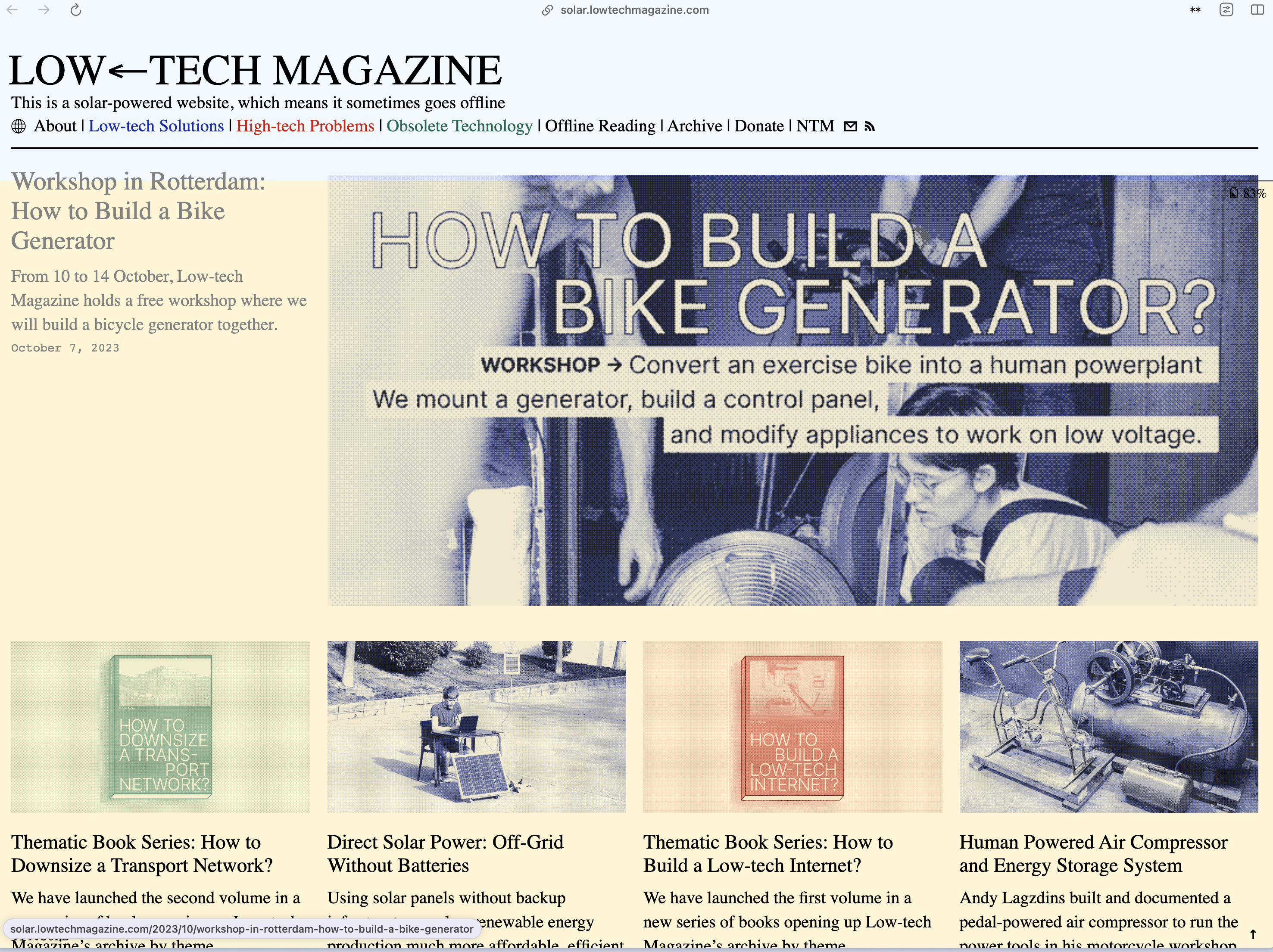
Low-tech Magazine is a blog created by Kris De Decker in 2007. The website is powered by a solar panel and a battery, and is only accessible when there is enough sunlight to power the server. The website is also available in a text-only version, which is accessible at all times. solar.lowtechmagazine.com
